 Duro
30 seconds
What's holding you back in bed?
During sex, you usually last…
When you're turned on, your erection is…
Before sex, you feel nervous…
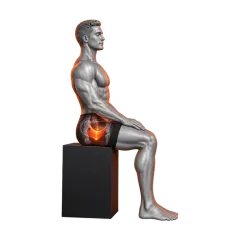
Your No.1 lever: control
Your Duro plan starts with control Kegels (slow and quick squeezes) and a breathing technique to bring your arousal down.

Your No.1 lever: firmness
Your Duro plan focuses on long pelvic floor holds and hip strength, which help keep blood in your erection.
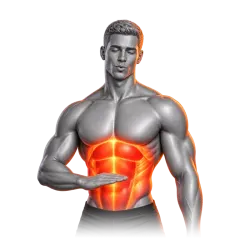
Your No.1 lever: your head
Your Duro plan mixes breathing, short exercises and coaching to take the pressure off before and during sex.
General guidance, not a diagnosis. If you have pain or a problem that keeps happening, talk to your GP.
Coming too quickly is one of the most common sex problems men have, and one of the least talked about. The good news: there are things you can try tonight, and there is a way to train real control over a few weeks. They are two different jobs, so this guide keeps them apart.
Are you actually coming “too quickly”?
Probably less often than you think. Porn sets a silly benchmark. Real life looks like this:
- In a stopwatch study of 500 couples in five countries, including the UK, the median time from penetration to ejaculation was 5.4 minutes, with a very wide range.
- UK urologists at BAUS put the average at about 5½ minutes, and say it is for each couple to decide what suits them.
- In Britain’s national sex survey, Natsal-3, 14.9% of sexually active men said they had come sooner than they wanted for three months or more in the past year. It was the most common problem reported by men aged 16 to 24.
Doctors only call it premature ejaculation (PE) when it happens within about a minute, almost every time, with little control and real distress. Finishing faster than you’d like now and then is normal. The NHS says the same. For the full numbers, see how long sex lasts. Not sure where you stand? Take the 5-question test, or read what premature ejaculation is. If it happened the first time with someone new, that is a different situation: see coming too quickly the first time or with a new partner.
Either way, control is a skill. Whether you have PE or just want to go for longer, the same training applies.
What can you do tonight to last longer?
These are quick tricks. They buy you time; they don’t teach your body anything. Use them while you train.
| What to try | How | Where it comes from |
|---|---|---|
| Masturbate beforehand | One to two hours before sex | Listed by the NHS |
| Thicker condom | Less sensation, more time | Listed by the NHS; see delay condoms |
| Partner on top | You lie back and stay more relaxed | Listed by the NHS; see sex positions to last longer |
| Stop-start | Stop moving when you feel close, wait for the urge to settle, carry on | NHS and BAUS; see stop-start and squeeze |
| Squeeze | Squeeze the head of the penis firmly for 10 to 20 seconds | NHS and BAUS; see stop-start and squeeze |
| Slow your breathing | Long, slow out-breaths instead of holding your breath | See breathing techniques |
A few honest notes:
- Stop-start and squeeze take practice. The NHS is clear on this, so try them solo first rather than learning under pressure.
- Sex is more than penetration. Taking time over foreplay takes the pressure off the clock: see foreplay to last longer.
- When you feel close in the moment, a pause, a slow out-breath and a change of rhythm are your tools: here is how to delay ejaculation in the moment.
- Numbing sprays and creams are a medical product, not a natural trick. The NHS notes they can numb your partner too. Compare them in our guide to treatment options.
- Booze isn’t a strategy. The NHS lists alcohol among the common causes of occasional erection trouble, so a few pints can swap one problem for another.
Which natural methods actually build control? Ranked by evidence
This is the part that changes things over weeks. Here is what the research supports, strongest first. None of it is a guarantee: results vary from man to man.
| Method | What the evidence says | Strength |
|---|---|---|
| Stop-start and squeeze (behavioural techniques) | In a 2015 review of 10 trials, two trials found these techniques added roughly 7 to 9 minutes compared with a waiting list. Two others found no difference. | Moderate, small trials |
| Combined training (pelvic floor + breathing) | A 2026 meta-analysis of 5 trials found pelvic floor exercises alone did worse than active comparisons, and that combining them with diaphragmatic breathing looked better. | Moderate, small pooled data |
| Pelvic floor exercises | In a small Italian study of 40 men with lifelong PE, 33 gained control after 12 weeks; average time went from about 32 seconds to about 2½ minutes. No control group, and sessions were run in a clinic. | Promising, early |
| Mindfulness and arousal awareness | The British Society for Sexual Medicine notes that, in one trial, stop-start combined with psychoeducation and mindfulness improved symptoms, distress and anxiety. | Supportive, mixed |
| General fitness | In a small two-week study of 76 young men, 7 minutes a day of interval training was linked to fewer symptoms. | Early, very short |
The pattern is clear: no single trick does it all. Combined approaches looked best in the studies above: noticing your arousal, pausing at the right time, and controlling the muscles involved. BAUS makes a similar point for medical care, describing a mix of medication and behavioural therapy as the mainstay of long-term treatment.
How do you train to last longer? A simple 12-week plan
You don’t need hours. You need regular, short practice. Here’s a realistic plan built on the techniques above.
Weeks 1 to 2: find the muscle and your breath
- Find your pelvic floor: squeeze as if you were stopping yourself from passing wind. In a mirror, the base of the penis lifts slightly and the testicles rise.
- Practise slow and quick squeezes. An NHS hospital leaflet suggests long holds and quick squeezes, several times a day.
- Breathe normally while you squeeze. Holding your breath is a common mistake.
- Add two minutes of slow breathing: in through the nose, longer out-breath.
Not sure you’ve got the right muscle? Find your pelvic floor first. The full routine is in the 12-week Kegel plan.
Weeks 3 to 6: solo stop-start
- Masturbate slowly and rate your arousal from 1 to 10.
- Stop at around 7 or 8. Breathe out slowly, relax your pelvic floor, wait for the urge to fade.
- Start again. Repeat three or four times before you let yourself finish.
- Keep doing your daily pelvic floor and breathing practice.
For a detailed solo week-by-week plan, see our edging guide.
Weeks 7 to 12: bring it into sex
- Tell your partner what you’re working on. Most partners are glad to help, and it takes pressure off.
- Use stop-start or a change of position when you get close. Our guides to positions that help you last longer and how to delay ejaculation in the moment go step by step.
- Use slow out-breaths to stay below your point of no return. More in controlling arousal with your breath.
After week 12: keep it ticking over. In a follow-up study, 64% of men kept their control at two years and 56% at three years. A few minutes a few times a week is enough to maintain it.
Control is only one part of going for longer. Fitness and breath matter too: our guide to sexual stamina covers that side.
How long before you notice a difference?
Studies usually measure progress at 6 and 12 weeks. In the Italian study above, the average time had already risen by week 6, and kept improving to week 12. Some men notice more confidence sooner, simply because they know what to do when they get close.
Be patient with yourself. If you’ve practised properly for three months and nothing has moved, that’s a good moment to talk to your GP.
What if nerves are the real problem?
For many men, the clock isn’t the issue: fear is. Worrying about finishing early raises tension, which makes finishing early more likely (the NHS lists performance anxiety among the psychological causes), so work on the nerves directly with our guide to performance anxiety in bed.
What about NoFap, pills from the internet and “natural” gummies?
There is no good evidence that NoFap or semen retention helps you last longer: skipping masturbation won’t teach control, practising it the stop-start way can (NoFap and other sex myths). “Herbal” sex supplements deserve caution, as some sold online have been found to contain hidden prescription drugs (foods and supplements to last longer). Medicines do exist and work for some men; they are a conversation for your GP or pharmacist, and training can go alongside them (treatment options).
Where does Duro fit in?
Duro is an iPhone app that turns this kind of training into a 5-minute daily session. You start with a free 3-minute check (no account, no email), then get a plan based on your weak spot: control, firmness or stress. It includes guided Kegels over 5 levels, breathing exercises, strength work shown on a 3D model, and challenges. Duro is currently in French only, with an English version in the works. If it isn’t on the App Store yet when you read this, you can leave your email on the homepage to hear when it’s live.
Duro is a training programme, not a medical treatment. If it keeps happening, talk to your GP.
When should you see your GP?
Talk to your GP, a pharmacist or a sexual health clinic if it happens most of the time, has gone on for months or is causing you or your partner distress. See a doctor promptly if:
- you have pain when you ejaculate or during sex;
- there is blood in your semen;
- the problem started suddenly after years without trouble;
- you also struggle to get or keep an erection: the British Heart Foundation says erection problems can be an early warning sign of heart disease;
- it is weighing on your mood or your relationship.
For who to see and what happens at the appointment, read when to see your GP.
FAQ
Can you last longer in bed without pills?
Many men can build more control without medication. UK urologists (BAUS) list the stop-start technique, the squeeze technique and pelvic floor exercises, practised regularly. Medicines exist and work for some men, and exercises can be done alongside them.
Does masturbating before sex help you last longer?
The NHS lists masturbating one to two hours before sex as something you can try yourself. It is a short-term trick, not training, and it does not suit every situation. Use it while you build real control with practice.
Do thicker condoms help you last longer?
The NHS suggests trying a thicker condom to reduce sensation. Some condoms also contain a numbing agent, which is a different product: check the packet. Neither changes your control over time.
Do Kegels help you last longer?
In a small Italian study, most men with lifelong premature ejaculation gained control after 12 weeks of pelvic floor training. A 2026 meta-analysis found exercises alone did less well than exercises combined with diaphragmatic breathing. So train your pelvic floor, but not on its own.
How long does it take to last longer naturally?
Studies usually check progress at 6 and 12 weeks. In one follow-up, about two-thirds of men kept their control at two years, so keep a little practice going after that.
When should I see a GP about coming too quickly?
See your GP if it happens most of the time, if it upsets you or your partner, or if you also have trouble getting or keeping an erection. Go sooner if there is pain or blood, or if the change came on suddenly.
Sources
- NHS — Ejaculation problems
- British Association of Urological Surgeons (BAUS) — Premature ejaculation
- Mitchell et al., The Lancet, 2013 — Sexual function in Britain (Natsal-3)
- Waldinger et al., Journal of Sexual Medicine, 2005 — Stopwatch study of ejaculation time in five countries
- Cooper et al., Sexual Medicine, 2015 — Behavioural therapies for premature ejaculation, systematic review
- Pastore et al., Therapeutic Advances in Urology, 2014 — Pelvic floor rehabilitation for lifelong premature ejaculation
- Pastore et al., Asian Journal of Andrology, 2018 — Long-term results of pelvic floor rehabilitation
- de Oliveira et al., Journal of Sexual Medicine, 2026 — Pelvic floor exercises for premature ejaculation, meta-analysis
- Gloucestershire Hospitals NHS Foundation Trust, 2025 — Pelvic floor exercises for men
- British Heart Foundation, 2026 — Erectile dysfunction and your heart
Information written with the help of AI from the sources cited, then checked. It is not a substitute for medical advice: if you have pain, a sudden problem or any doubt, talk to your GP.