 Duro
30 seconds
What's holding you back in bed?
During sex, you usually last…
When you're turned on, your erection is…
Before sex, you feel nervous…
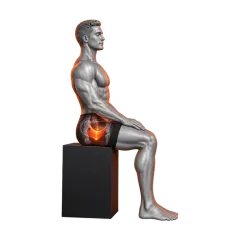
Your #1 lever: control
Your Duro plan starts with control kegels (slow and quick squeezes) and a breathing technique to slow your arousal down.

Your #1 lever: firmness
Your Duro plan focuses on long pelvic floor holds and hip strength, which help keep blood in your erection.

Your #1 lever: your head
Your Duro plan mixes breathing, short exercises and coaching to take the pressure off before and during sex.
General guidance, not a diagnosis. If you have pain or a problem that won't go away, talk to a doctor.
Finishing faster than you want is one of the most common sex problems guys have. The Cleveland Clinic puts it at about 1 in 5 men aged 18 to 59, and calls it the most common male sexual issue. It’s not dangerous, and it’s not a life sentence.
There are two different jobs here: getting through tonight, and building control that sticks. This guide keeps them apart.
Are you actually finishing “too fast”?
Maybe not as often as you think. Porn sets a ridiculous benchmark. Real numbers:
- In a stopwatch study of 500 couples in five countries, the median time from penetration to ejaculation was 5.4 minutes, with a huge range. Condoms and circumcision made no significant difference.
- Sex therapists surveyed in 2008 rated 3 to 7 minutes of intercourse as “adequate” and 7 to 13 as “desirable”. Ten to thirty minutes? “Too long.”
- Doctors only talk about premature ejaculation (PE) when it happens almost every time, with little control and real distress. US urologists (AUA/SMSNA) use about 2 minutes for lifelong PE; the ISSM uses about 1 minute.
Want the full picture? Read how long sex really lasts. Either way, control is a skill, and the same training applies whether you have PE or just want to go longer. Not sure? Take the 5-question premature ejaculation test.
What can you do tonight to last longer?
These are quick fixes. They buy you time; they don’t teach your body anything new. Use them while you train.
- Breathe slow, especially on the exhale. When you get excited, breathing gets fast and shallow, and many guys hold their breath. Do the opposite: in through the nose, long slow breath out. A review of 15 studies found breathing under 10 breaths a minute lowered anxiety and increased relaxation in healthy people. No study proves it delays ejaculation by itself, but it helps you stay calm enough to use the next steps.
- Stop-start. When you feel close, stop moving completely. Wait about 30 seconds, until the urge drops, then go again. The Cleveland Clinic lists it among the first behavioral techniques doctors suggest. More on how to hold back in the moment.
- The squeeze. Just before the point of no return, you or your partner firmly squeeze the head of the penis where it meets the shaft, for several seconds, until the urge fades.
- Change the rhythm, not just the speed. Slower, deeper strokes, grinding instead of thrusting, a pause to kiss or switch to oral or hands. The same logic is behind the sex positions that help you last longer. Anything that drops stimulation for a moment gives you room.
- Wear a condom. Less sensation can mean more time. The ISSM lists condoms among PE options. Some “delay” condoms contain a numbing agent, which is a different product: check the box.
- Masturbate an hour or two before. Also on the ISSM list. Works for some guys, not all, and it doesn’t fit every situation.
A few honest notes:
- Stop-start and squeeze take practice. Learn them solo first, so you’re not figuring it out under pressure. Our step-by-step guide to the stop-start and squeeze techniques shows how, alone and with a partner.
- “Think about baseball” is a weak plan. The Cleveland Clinic mentions distraction, but tuning out also means you can’t feel when you’re getting close. Paying attention works better than checking out.
- Numbing sprays and creams are a medical product, not a natural trick, and they can numb your partner too.
Which methods actually work? Evidence and timing compared
Here’s what the research supports, so you can see what’s a quick fix and what’s real training. None of it is a guarantee; results vary from man to man.
| Method | Type | Evidence | When it helps |
|---|---|---|---|
| Stop-start and squeeze | Technique, solo then partner | In a 2015 review of 10 trials, two trials found 7 to 9 extra minutes vs. a waiting list; two others found no difference. Small trials. | Usable tonight, better with weeks of practice |
| Pelvic floor training (Kegels) | Daily exercise | In one small study of 40 men with lifelong PE, 33 gained control after 12 weeks; no control group, clinic-based. | First changes around 6 weeks, measured at 12 |
| Pelvic floor + breathing combined | Daily exercise | A 2026 meta-analysis of 5 trials (236 men) found exercises alone did less well than medication or combined approaches like diaphragmatic breathing. | Weeks |
| Slow breathing | Calm-down tool | Lowers anxiety in healthy people (review of 15 studies); no PE trial on its own. | Tonight, and better with practice |
| Condom, masturbating before | Quick fix | Listed by the ISSM; no long-term effect on control. | Tonight only |
| Changing rhythm or position | Quick fix | Common sense; no trials. Over half of men with PE in a large survey had already tried self-help tricks like this. | Tonight only |
| Medication (prescription) | Medical treatment | First-line in US urology guidelines, with side effects to discuss. | Depends on the drug |
The pattern: no single trick does it all. Guys who improve tend to combine three things: noticing their arousal level, pausing at the right moment, and controlling the muscles involved.
How do you train to last longer? A 12-week plan
You don’t need hours. You need short, regular practice. Here’s a realistic plan built on the methods above.
Weeks 1 to 2: find the muscle and your breath
- Find your pelvic floor: squeeze as if you were stopping yourself from peeing or passing gas. The base of the penis lifts slightly.
- Practice slow holds (3 to 5 seconds) and quick squeezes, then relax fully between each one. The relax part matters as much as the squeeze.
- Keep breathing while you squeeze. Holding your breath is the #1 mistake.
- Add 2 minutes of slow breathing: in through the nose, longer out-breath.
Our full routine, with levels and common mistakes, is in Kegels for men: a 12-week plan.
Weeks 3 to 6: solo stop-start
Practice arousal control during masturbation: stop around 7 out of 10, breathe out, start again 3-4 times. The full solo plan is in how to train yourself to last longer.
Weeks 7 to 12: bring it into sex
- Tell your partner what you’re working on. Most partners are glad to help, and it takes a ton of pressure off.
- Use stop-start or a rhythm change when you get close.
- Use slow exhales to stay below your point of no return. More in how to control arousal with your breath.
After week 12: keep it going. In a follow-up study, 64% of men kept their control at two years and 56% at three years. A few minutes a few times a week helps you hold on to what you built.
How long before you notice a difference?
Studies usually measure progress at 6 and 12 weeks. In the small 2014 study above, average time had already gone up by week 6 and kept improving to week 12. Many guys feel more confident sooner, simply because they now know what to do when they get close.
One interesting finding: in a 2025 study, men with PE didn’t have weaker pelvic floors than other men. The benefit seems to come from control and body awareness, not raw strength. That’s why squeezing harder isn’t the goal; noticing and relaxing is.
If you’ve practiced properly for three months and nothing has moved, that’s a good time to talk to a doctor.
What if nerves are the real problem?
For a lot of guys, the clock isn’t the issue: fear is, and a 2025 meta-analysis found anxiety symptoms in around 42% of men with PE (the studies varied a lot). Breathing, practice, talking to your partner and, if needed, a sex therapist all help break that loop, as explained in performance anxiety in bed.
Pills, sprays or training?
Medical treatments exist and they work for some men: US urology guidelines list daily SSRIs, on-demand medication and numbing products as first-line options, and say combining behavioral therapy with medication may work better than either alone. Training is complementary, not a replacement, and stay away from “male enhancement” pills sold online: the FDA keeps warning that many contain hidden drug ingredients. Evidence, side effects and costs side by side: premature ejaculation treatments compared.
Where does Duro fit in?
Duro is an iPhone app that turns this kind of training into a 5-minute daily session. You start with a 3-minute check-in (no account, no email), then get a plan built from your answers. It includes guided Kegels over 5 levels, breathing drills, solo challenges, and a 3D model that shows each move. One honest caveat: the app is in French only for now, with English on the way. Not on your App Store yet, or on Android? Leave your email and we’ll let you know as soon as it’s ready for you.
Duro is a training program, not a medical device or treatment, and it hasn’t been tested in a clinical trial.
When should you see a doctor?
Talk to a doctor or urologist if:
- it happens almost every time, or has gone on for months;
- it’s causing you or your partner distress, or you avoid sex because of it;
- it started suddenly after years of no problem;
- you also have trouble getting or staying hard. Erection problems can be an early warning sign: in a meta-analysis of 14 studies, men with ED had a higher risk of heart attack and stroke.
See a doctor promptly if you have pain when you ejaculate, blood in your semen, or other new symptoms. You won’t be the first guy to bring it up, and doctors have several options to offer.
FAQ
How can I last longer in bed tonight?
Slow, long exhales, pausing when you get close (stop-start), squeezing the head of the penis, slowing the rhythm, a condom, or masturbating an hour or two before. The ISSM lists these as options. They buy you time but don't train lasting control on their own.
How do I not cum so fast without pills?
Practice stop-start solo first, then with a partner, and train your pelvic floor and breathing a few minutes a day. MedlinePlus says most men can learn to control ejaculation with information and practice. Results vary, and medication remains an option if training isn't enough.
How long should a man last in bed?
In a stopwatch study of 500 couples, the median time from penetration to ejaculation was about 5.4 minutes. Sex therapists surveyed in 2008 rated 3 to 7 minutes as adequate. Thirty minutes is a porn benchmark, not a normal one.
Do Kegels help you last longer?
In small trials, many men with lifelong premature ejaculation gained control after 12 weeks of pelvic floor training. A 2026 meta-analysis found exercises alone did less well than medication or exercises combined with diaphragmatic breathing. So train your pelvic floor, but not on its own.
How long does it take to last longer naturally?
Studies usually measure progress at 6 and 12 weeks of regular practice. In one small study, average time had already improved by week 6. Daily consistency matters more than intensity.
When should I see a doctor about finishing too fast?
If it happens almost every time, bothers you or your partner, started suddenly, or comes with erection problems. See a doctor promptly for pain, blood in your semen or other new symptoms. Erection problems can be an early warning sign of heart disease.
Sources
- Waldinger et al., Journal of Sexual Medicine, 2005 — Stopwatch study of ejaculation time in five countries
- Corty & Guardiani, Journal of Sexual Medicine, 2008 — Sex therapists' views on intercourse duration
- American Urological Association / SMSNA, 2020 — Disorders of Ejaculation guideline
- International Society for Sexual Medicine (ISSM) — What is premature ejaculation?
- Cleveland Clinic, 2023 — Premature ejaculation
- MedlinePlus (U.S. National Library of Medicine) — Premature ejaculation
- Cooper et al., Sexual Medicine, 2015 — Behavioral therapies for premature ejaculation, systematic review
- Pastore et al., Therapeutic Advances in Urology, 2014 — Pelvic floor rehabilitation for lifelong premature ejaculation
- de Oliveira et al., Journal of Sexual Medicine, 2026 — Pelvic floor exercises for premature ejaculation, meta-analysis
- Zaccaro et al., Frontiers in Human Neuroscience, 2018 — Slow breathing and relaxation, systematic review
Informational content written with the help of AI from the sources cited, then reviewed. It doesn't replace medical advice: if you have pain, a sudden problem or any doubt, see a doctor.